How to Build a Skincare Routine: The Complete Step-by-Step Guide for Beginners
You do not need a ten-step routine to get healthy, glowing skin. In fact, using too many strong products at the same time often damages your skin barrier, causes painful breakouts, and leaves your face red and tight.
The real secret to clear skin is consistency and simplicity. When you give your skin the right basic care every single morning and night, it repairs itself naturally. In this complete guide, you will learn how to choose the right products for your skin type, how to layer them in the correct order, and how to build a routine that actually gives you long-term results.

Find Your Custom Routine
Select your skin details below to get a customized step-by-step routine blueprint via WhatsApp or email.
The Three-Product Baseline
Every healthy skincare routine begins with three simple items: a gentle cleanser, a barrier moisturizer, and a broad-spectrum sunscreen with SPF 30 or higher. If you do not have these three steps working smoothly, adding serums, toners, or peel pads will only irritate your skin. Give yourself four weeks on this basic routine before adding any active treatments.
Why Most Beginners Fail When Starting a Skincare Routine
When people decide to take care of their skin, they often walk into a beauty store and buy five or six different bottles at once. They pick up a foaming wash, an exfoliating toner, a brightening serum, an anti-aging cream, and a scrub. Then they go home and apply all of them on the same night.
Within a week, their face feels tight, stings when water touches it, and breaks out in tiny red bumps. They think the products are not working, or that their skin is cursed. But the real problem is product overload.
Your skin is a living shield called the skin barrier. Its outer layer is made of skin cells glued together by natural fats like ceramides, cholesterol, and fatty acids. When you throw too many harsh chemicals at this shield at once, you wash away the natural glue. Water escapes, bacteria enters, and your skin becomes inflamed.
Building a skincare routine is not about buying every product you see on social media. It is about learning what your skin needs, giving it gentle daily support, and protecting it from sun damage. When you follow this calm approach, your skin stays clear, calm, and naturally radiant.
The 3 Non-Negotiable Steps of Every Skincare Routine
No matter your age, gender, or budget, these three steps form the foundation of your daily skin health. You can add extra steps later, but these three are the core pillars that do 80% of the work.
1. Gentle Cleanser
Cleansing cleans away dirt, excess oil, sweat, and makeup without stripping away your natural oils. A good cleanser leaves your skin feeling soft and clean, never tight or squeaky. If your face feels tight after washing, your cleanser is too harsh.
2. Barrier Moisturizer
Moisturizers do two important jobs: they deliver water to your skin cells and lock it in so it cannot evaporate into the air. Even if your skin is oily, you still need a moisturizer. Skipping moisturizer tricks your skin into producing even more oil.
3. Broad-Spectrum Sunscreen
Sunscreen is the most powerful anti-aging and skin-protecting product on earth. Sunlight contains ultraviolet rays that break down collagen, create dark spots, and cause premature wrinkles. Wearing SPF 30 or higher every day prevents up to 80% of visible skin aging.
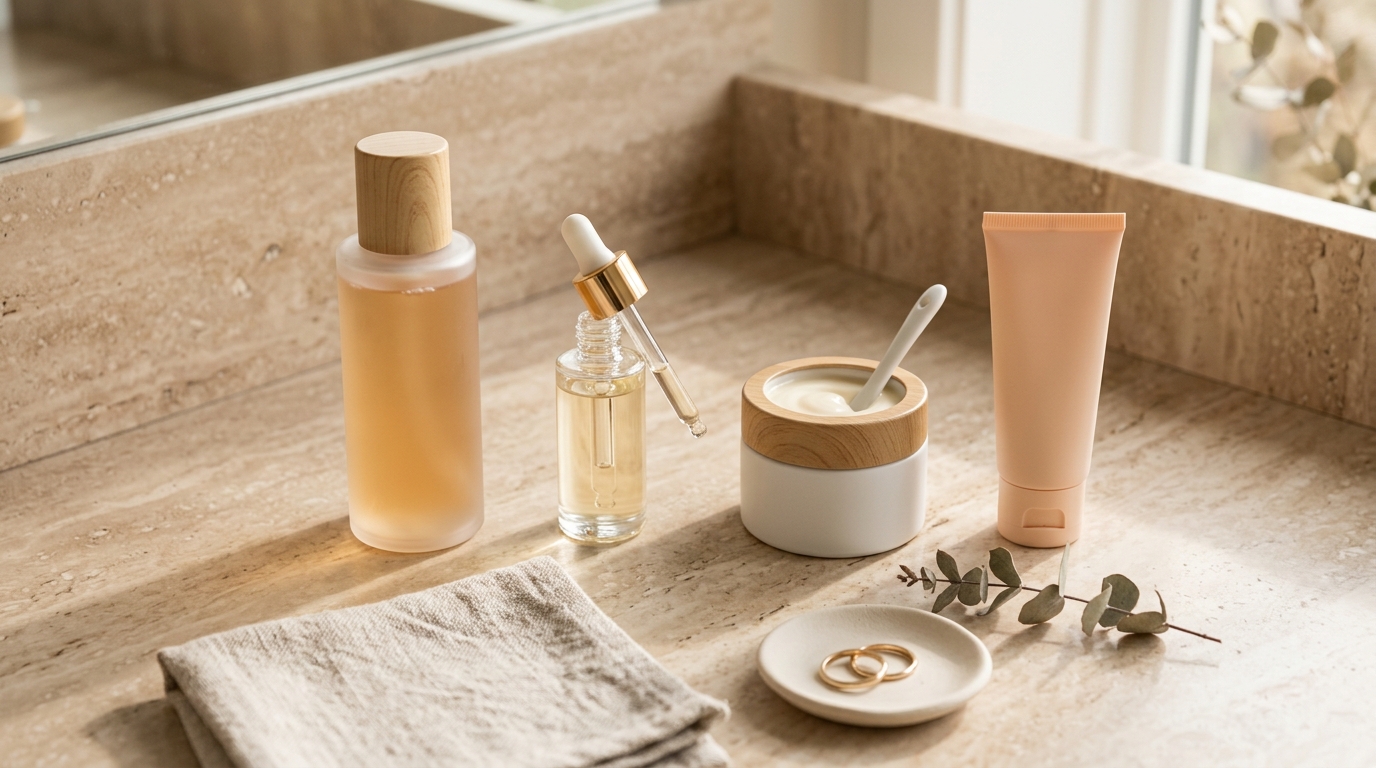 Figure 1: The minimalist daily skincare setup. A gentle cleanser, active serum, nourishing moisturizer, and broad-spectrum sunscreen are all you need for glowing skin.
How to Find Your True Skin Type: The Simple Bare-Face Test
Before you buy any skincare product, you must know your skin type. Many people buy products designed for oily skin when they actually have dehydrated dry skin, which makes their problem worse.
You can find your real skin type at home in less than an hour using the simple bare-face test. Follow these steps:
Wash Your Face With a Gentle Cleanser
Use a mild cleanser and lukewarm water. Gently pat your skin dry with a clean towel. Do not rub.
Wait 45 to 60 Minutes Without Touching Anything
Do not apply toner, serum, moisturizer, or makeup. Leave your skin completely bare in a room with comfortable temperature.
Examine Your Skin in Front of a Mirror
Look closely at your forehead, nose, chin, and cheeks to see how your skin feels and looks:
- Oily Skin: Your entire face looks shiny, feels slick to the touch, and your pores look visible across your cheeks and forehead.
- Dry Skin: Your face feels tight when you smile, looks dull, and you may see small dry flakes around your nose or eyebrows.
- Combination Skin: Your forehead, nose, and chin (the T-zone) look shiny, but your cheeks feel normal or dry.
- Normal Skin: Your face feels comfortable, soft, and neither oily nor tight. You have balanced skin.
- Sensitive Skin: Your skin turns red easily, feels itchy, or stings after washing. Sensitive skin can happen with any skin type.
The Golden Rules: Do's and Don'ts of Building a Daily Routine
To keep your skin calm and clear, follow these evidence-based daily habits. These rules will save you time, money, and unnecessary skin irritation.
What You MUST Do
- Introduce one new product at a time: Wait at least two to three weeks before adding another item so you know what works.
- Patch test every new formula: Apply a tiny dab behind your ear or along your jawline for 24 hours to check for allergic reactions.
- Apply products from thinnest to thickest: Start with watery toners, move to light serums, and finish with thick barrier creams.
- Wear broad-spectrum sunscreen every day: Protect your skin from UV rays even when sitting indoors near windows or on cloudy days.
- Wash your hands before touching your face: Keep bacteria away from open pores and active blemishes.
- Clean your pillowcase every week: Pillowcases collect hair oils and dead skin cells that can trigger breakouts while you sleep.
What You MUST AVOID
- Do not scrub your face with harsh physical scrubs: Walnut shells and abrasive beads create micro-tears in your delicate skin barrier.
- Do not mix strong active ingredients together: Never apply retinol and strong AHA/BHA chemical exfoliators on the same evening.
- Do not wash your face with hot water: Scalding water strips away natural lipids, leaving your skin red, parched, and irritated.
- Do not pop or pick at pimples: Squeezing blemishes pushes bacteria deeper into the pore and causes long-lasting dark marks.
- Do not switch products every few days: Real skin cell turnover takes 28 to 30 days. Give your products time to work.
- Do not skip moisturizer because you have oily skin: Dehydrated oily skin will produce twice as much grease to protect itself.
How to Layer Skincare: The Exact Order From Morning to Night
Once your basic trio is in place and your skin is calm, you can add targeted treatment serums to address specific concerns like dark spots, fine lines, or active acne.
The golden rule of skincare layering is simple: always apply products from thinnest texture to thickest texture. Thin water-based serums absorb quickly into the deeper layers of skin. Thick creams and oils sit on top to seal everything in. If you put a heavy oil or cream first, water-based serums cannot pass through it.
| Step # | Morning Routine (Defense & Glow) | Evening Routine (Repair & Renewal) |
|---|---|---|
| Step 1 | Gentle Cleanser: Splash with water or use a mild foaming wash to remove night sweat and oil. | First Cleanse: Use micellar water or cleansing balm to melt sunscreen, pollution, and makeup. |
| Step 2 | Hydrating Toner or Mist (Optional): Pat a soothing toner into damp skin to boost moisture levels. | Water-Based Cleanser: Wash with a gentle gel or cream cleanser to leave the skin fresh and clean. |
| Step 3 | Antioxidant Serum (Vitamin C): Neutralizes free radicals from pollution and brightens dark spots. | Hydrating Serum (Hyaluronic Acid / Peptides): Replenishes water in deep surface layers. |
| Step 4 | Lightweight Day Moisturizer: Gel-cream or light lotion that absorbs quickly without feeling greasy. | Targeted Active (Retinol or BHA Acid): Speeds up cell turnover, clears pores, or boosts collagen. |
| Step 5 | Broad-Spectrum Sunscreen (SPF 30-50): The ultimate step. Protects against dark spots and premature aging. | Nourishing Night Cream: Rich in ceramides and fatty acids to rebuild the skin barrier as you rest. |
 Figure 2: Apply active serums directly to slightly damp skin. Pat gently with clean fingertips instead of rubbing to speed absorption and prevent pilling.
"The biggest mistake patients make when starting a skincare routine is treating active ingredients like everyday candy. Retinol, salicylic acid, and pure ascorbic acid are powerful tools. If your skin is peeling, burning, or red, that is not a sign of the product 'cleaning out' your skin. It is your skin barrier crying for help. Back down to cleanser, plain moisturizer, and sunscreen until your skin feels completely calm again."
Your 30-Day Skincare Action Plan: Step-by-Step Transition
Do not try to change your entire beauty routine overnight. Follow this simple three-phase plan to help your skin adapt smoothly without purging or irritation.
Days 1 to 14: Establish Your Core Baseline
Use only your gentle cleanser, barrier moisturizer, and daily sunscreen. Cleanse at night, apply moisturizer morning and night, and apply SPF every single morning. Do not use any acids, scrubs, masks, or serums during these first two weeks.
Goal: Calm down existing redness and restore your natural moisture balance.Days 15 to 21: Introduce Your First Active Serum
Choose one active ingredient that matches your primary skin goal. If you want brighter skin and dark spot defense, choose a stabilized Vitamin C serum in the morning. If you want clearer pores, choose a 2% Salicylic Acid solution two nights per week. If you want smoother texture, start low-strength Retinol two nights per week.
Goal: Test skin tolerance without overwhelming the natural barrier.Days 22 to 30: Evaluate Results and Lock In Consistency
Take a photo in natural daylight. Check if your skin feels softer, less oily, or more hydrated. If your skin is happy, you can increase your active serum frequency to three nights per week. If you notice dryness, apply moisturizer before your active to buffer the skin.
Goal: Build a sustainable lifelong habit that fits your daily schedule.Key Ingredients to Look For: Match Actives to Your Skin Goals
When reading product labels, do not focus on fancy brand marketing. Look directly at the active ingredient list. Here are the most proven skincare ingredients backed by scientific research:
Niacinamide (Vitamin B3)
Best for: Large pores, excess oil, redness, and dark marks.
How it works: Soothes inflammation, regulates oil production, and strengthens barrier lipids without causing dryness. Safe for all skin types.
Hyaluronic Acid
Best for: Dehydrated skin, fine surface lines, and dullness.
How it works: A powerful humectant that can hold up to 1,000 times its weight in water. Always apply it to damp skin and seal with moisturizer.
Salicylic Acid (BHA)
Best for: Blackheads, whiteheads, acne bumps, and clogged pores.
How it works: An oil-soluble acid that travels inside your pores to dissolve built-up sebum and dead skin cells. Use 2 to 3 times per week.
Retinol (Vitamin A)
Best for: Fine lines, uneven texture, loss of firmness, and persistent breakouts.
How it works: Signals skin cells to turn over faster and boosts collagen production. Use strictly at night and start just two nights per week.
What Real Readers Experience With This Routine Framework
Thousands of readers have simplified their beauty routines with this guide. Here is what they experienced after following the minimalist framework:
"I used to spend thousands on elaborate 10-step skincare sets that only gave me cystic acne and burning redness. Following Audrey's advice to strip back to just cleanser, moisturizer, and SPF cleared my skin in five weeks. This guide literally saved my face."
"The bare-face test was an eye-opener. I spent years thinking I had oily skin, but I was just severely dehydrated from harsh foaming cleansers. Once I switched to a gentle hydrating wash and barrier cream, the oiliness stopped completely."
"The Do's and Don'ts table should be printed and stuck on every bathroom mirror. The advice on how to buffer retinol and layer thinnest to thickest stopped all my peeling. My skin looks smoother and clearer than it has in years."
"I used the WhatsApp consultation button at the top of this article. The team answered all my questions about layering sunscreen under makeup in less than an hour. Clear, honest, science-backed guidance without pushing unnecessary products."
Frequently Asked Questions About Building a Skincare Routine
Here are the most common questions our editorial team receives from beginners starting their skincare journeys:
How long does it take for a new skincare routine to show visible results?
Real skin cell turnover takes about 28 to 30 days in healthy adults. You will usually feel better hydration and softer skin within the first week of using a good moisturizer. However, visible improvements in acne, dark spots, or skin texture take between four and eight weeks of consistent daily use. Give every routine at least one full month before deciding if it works.
Can I use the same moisturizer for morning and night?
Yes. You do not need separate day and night creams if you are on a budget. A simple, fragrance-free barrier moisturizer with ceramides or glycerin works wonderfully both morning and evening. The only rule is that your morning moisturizer must either contain SPF 30+ or be followed by a dedicated sunscreen.
Do I really need a facial toner?
No. A toner is completely optional. Modern cleansers are already pH-balanced, so you do not need a toner to balance your skin's pH like people did twenty years ago. If you want extra hydration or gentle exfoliation, a toner can be helpful, but it is not essential for a beginner routine.
What is the difference between skin purging and a bad reaction?
Skin purging happens when you use ingredients that speed up cell renewal (like retinol, salicylic acid, or glycolic acid). It brings existing clogs to the surface faster in places where you normally get pimples, and it clears up within 4 to 6 weeks. A bad reaction or allergy causes redness, burning, itching, or breakouts in areas where you never break out. If your face itches or burns, stop using the product immediately.
Should I wash my face in the morning with cleanser?
It depends on your skin type. If you have very oily skin or wake up with greasy buildup, a gentle foaming wash is great. If you have dry, normal, or sensitive skin, splashing your face with cool or lukewarm water is often plenty to refresh your skin without washing away natural protective lipids.
Can I mix Vitamin C and Niacinamide in the same routine?
Yes. Older research suggested that Vitamin C and Niacinamide could cancel each other out, but modern cosmetic formulation science proves they work wonderfully together. Layering Vitamin C and Niacinamide provides powerful protection against dark spots, dullness, and environmental sun damage.
Do I need a separate eye cream?
For most beginners, no. Your regular fragrance-free facial moisturizer can be gently patted around your eye area to provide plenty of hydration. You only need a dedicated eye cream if you want to target specific issues like dark circles (with caffeine or vitamin K) or fine lines (with low-dose peptides).
What is the best way to introduce retinol into my routine?
Start slow and low. Pick a beginner over-the-counter retinol formula. Apply a pea-sized amount only two nights per week for the first three weeks. You can use the "sandwich method" (moisturizer, retinol, then moisturizer again) to buffer your skin against peeling. Only increase frequency if your skin feels completely comfortable.
Why does my sunscreen pill and roll off in small balls?
Pilling happens when you apply too many heavy products too quickly, or when silicone-based products are mixed with water-based products. To prevent pilling, let your moisturizer absorb fully for 2 to 3 minutes before applying sunscreen, and pat your sunscreen gently onto the face instead of vigorously rubbing it in circles.
How can I build an effective routine on a tight budget?
Stick to simple drugstore essentials for your cleanser, moisturizer, and sunscreen. Many affordable drugstore brands offer gentle, dermatologist-tested formulas with ceramides and hyaluronic acid that perform just as well as luxury products costing five times more. Save your budget for one targeted active serum if needed.
Ready to Take the Guesswork Out of Your Skincare?
Healthy skin is a marathon, not a sprint. Start with the core three steps today, be patient with your skin, and watch your natural glow return week after week.