Retinol for Beginners: How to Start Without Damaging Your Skin Barrier
Retinol is the gold standard for smoothing uneven skin texture, clearing stubborn pore congestion, and reducing fine lines. But starting with too high a percentage or using it every night is the fastest way to cause peeling, burning, and severe flaking.
You do not have to suffer through weeks of redness to get radiant skin. When you start slowly with the right formula, buffer with moisturizer, and protect your skin with daily sunscreen, retinol works gently in the background. In this complete beginner guide, you will learn how to choose your starting strength, how to use the famous sandwich method, and how to build a safe schedule that prevents irritation.

Find Your Safe Retinol Schedule
Select your age bracket and skin sensitivity below to receive your personalized weekly schedule via WhatsApp.
Start Low and Slow: Frequency Beats Intensity
The biggest mistake beginners make is applying retinol every single night right away. Retinol works by gradually retraining your skin cells to turn over faster. Applying too much too fast does not speed up results; it simply strips your epidermal lipids and leads to contact dermatitis. Begin with a pea-sized amount just one or two nights per week for your first month.
What Retinol Is: The Biology of Vitamin A in Your Skin
Retinol is a cosmetic derivative of Vitamin A that belongs to a wider family called retinoids. While prescription retinoids like tretinoin bind directly to skin receptors immediately, over-the-counter retinol must undergo a gentle conversion process inside your skin cells.
When you apply a retinol cream or serum, enzymes in your skin convert it in two steps: first from Retinol into Retinaldehyde, and then from Retinaldehyde into active Retinoic Acid. This two-step biological conversion acts like a natural speed-control switch. It allows the active molecule to work effectively while remaining much gentler on your delicate surface barrier than prescription medicines.
Once converted into retinoic acid, it signals skin cells in the deeper layers to divide and travel to the surface at a youthful pace. This natural shedding clears dead skin cells out of pores, smooths rough texture, and stimulates fibroblasts to generate fresh collagen fibers.
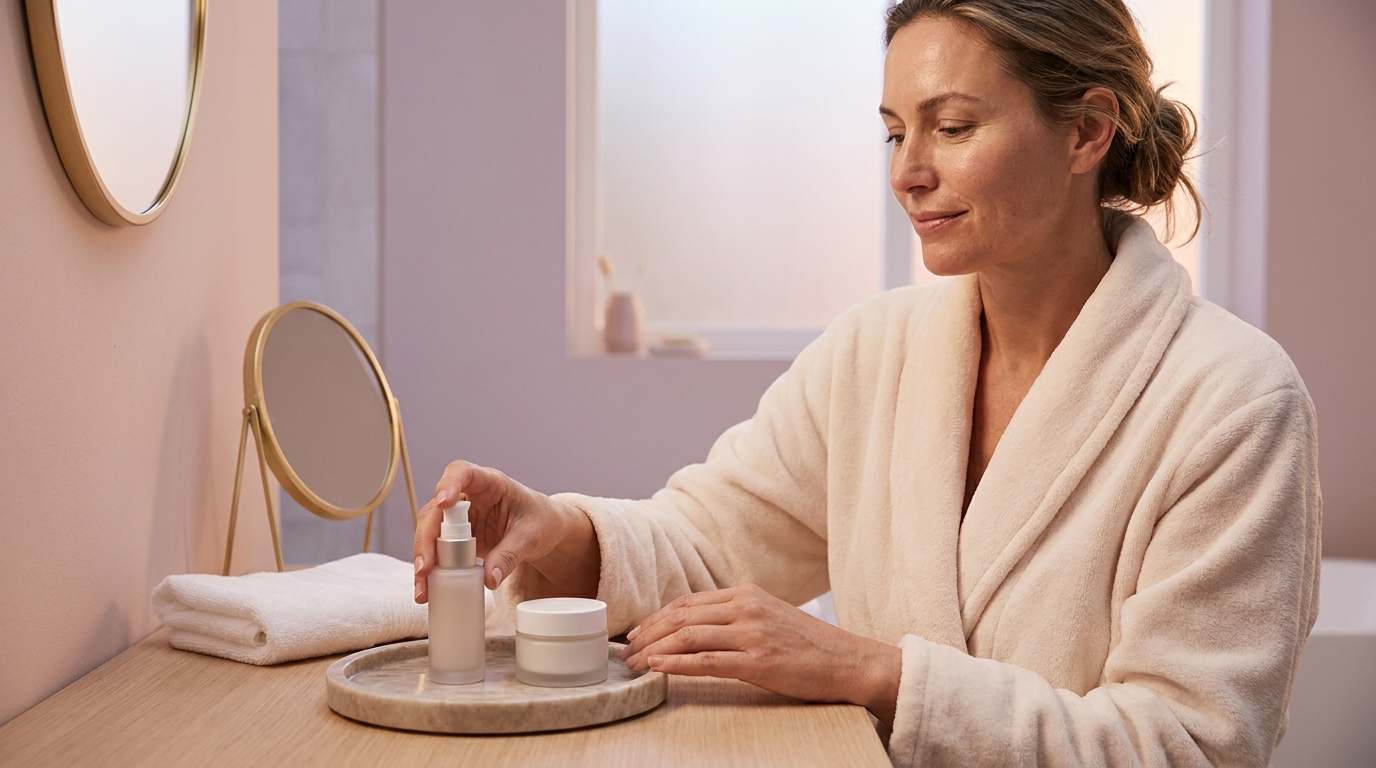
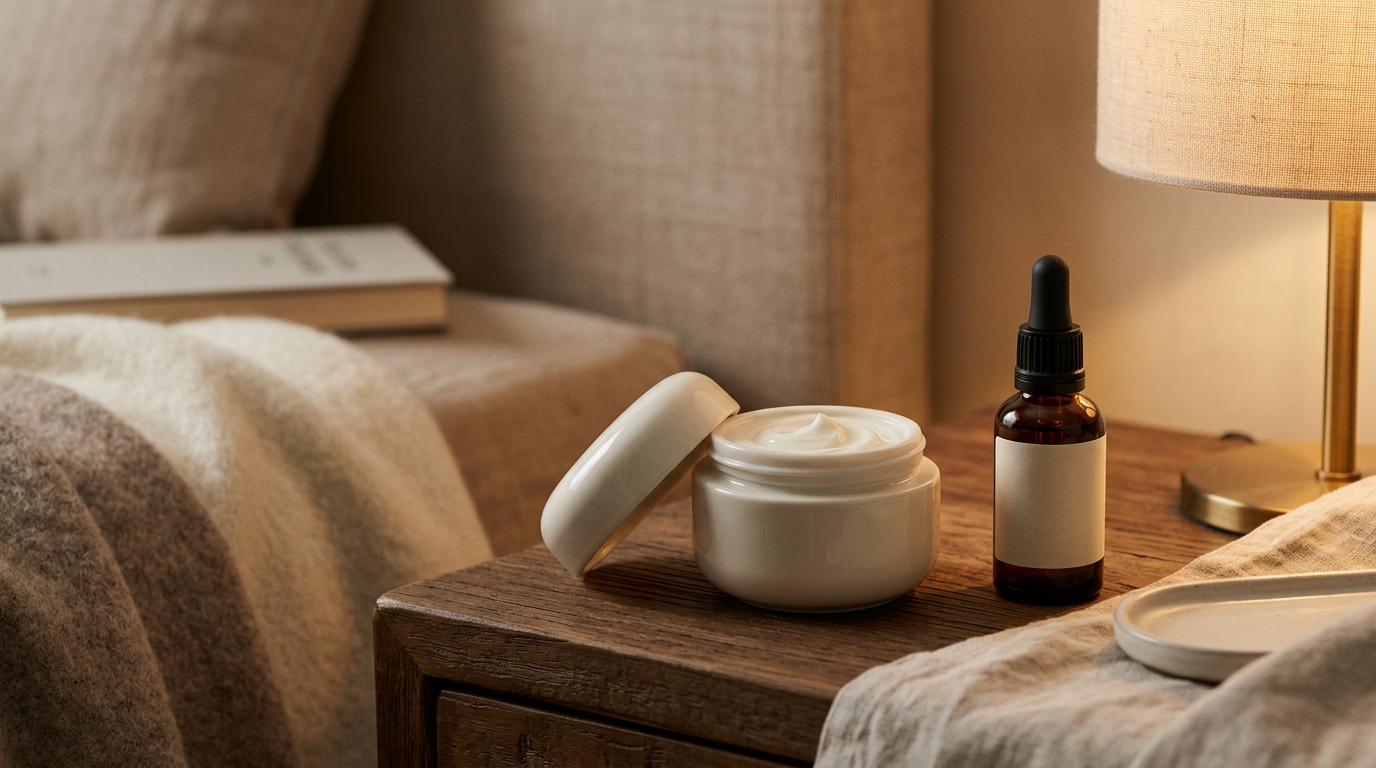 Figure 1: Retinol should be used strictly at night. Pair your active retinol with a rich, fragrance-free barrier cream containing ceramides to prevent overnight moisture loss.
How to Choose Your Starting Strength: Avoid Percentage Traps
Beauty brands often compete by putting huge percentages on their product boxes. You might see bottles boasting "1% Retinol Complex" or "2.5% Vitamin A Solution." For a beginner, these numbers can be misleading and dangerous.
A true 1% pure retinol formula is extremely potent and meant only for advanced users who have used retinoids for years. Beginners should look for true concentrations between 0.1% and 0.3%. Here is how to match different retinol formats to your skin type:
| Product Format | Best Skin Match | Recommended Strength | Why It Works for Beginners |
|---|---|---|---|
| Encapsulated Retinol Cream | Sensitive & dry skin | 0.1% to 0.2% | Microscopic lipid capsules release the retinol slowly over several hours overnight, preventing sudden irritation spikes. |
| Retinol in Squalane Serum | Normal to dry skin | 0.2% to 0.3% | Squalane is a skin-identical oil that replenishes surface lipids while the retinol absorbs, buffering against dryness. |
| Lightweight Water-Gel Serum | Oily & acne-prone skin | 0.1% to 0.3% | Absorbs quickly without heavy oils or pore-clogging waxes, delivering active Vitamin A directly to congested pores. |
| Retinol + Peptide Night Cream | Mature & normal skin | 0.2% to 0.3% | Combines gentle cell turnover with firming peptides and ceramides in a single comforting night step. |
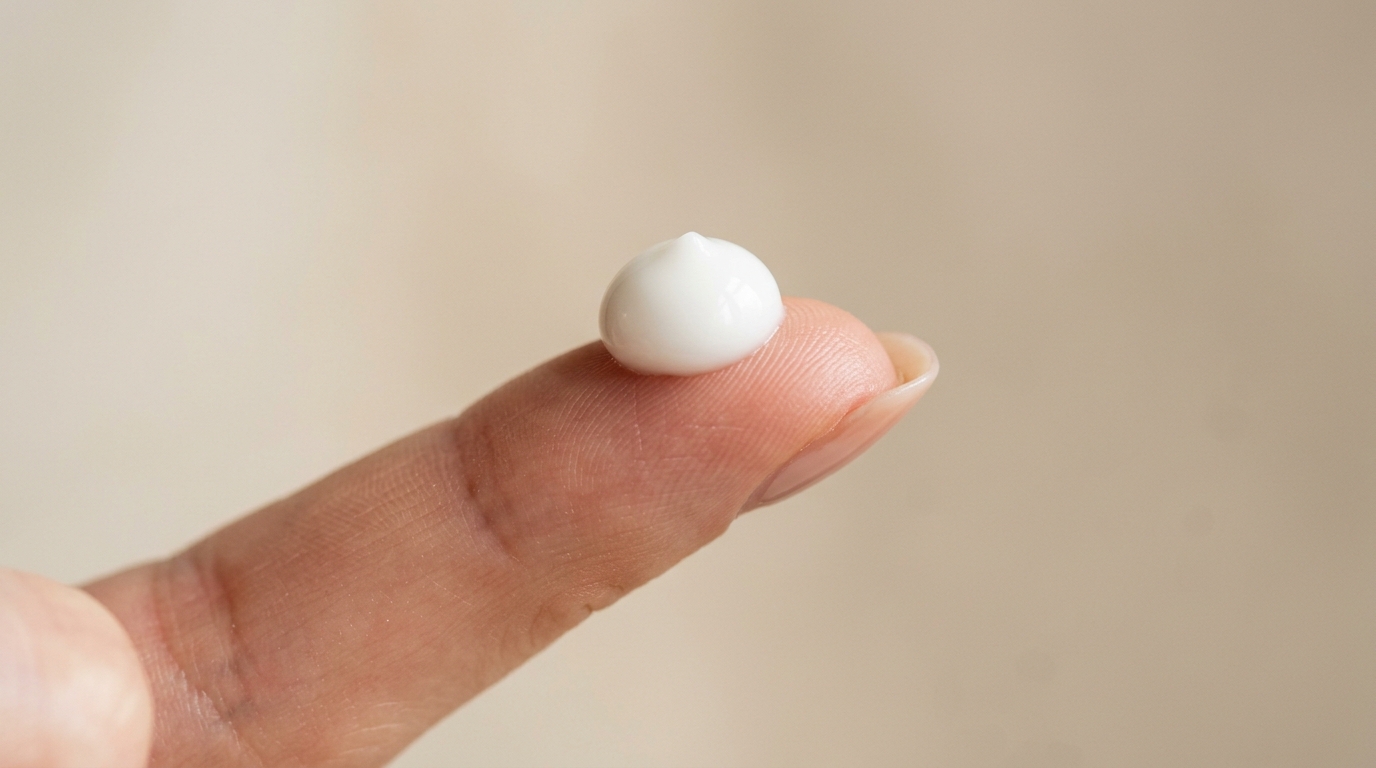 Figure 2: The golden rule of retinol application. A single pea-sized amount is all you need to cover your entire face. Applying more will not give faster results; it will only trigger burning and peeling.
The Famous "Sandwich Method": The Secret to Zero Peeling
If you have sensitive skin, or if you have tried retinol in the past and quit because your face felt like sandpaper, the sandwich technique is your solution. Dermatologists recommend this buffering method to protect the outer skin layer while allowing retinol to work smoothly underneath.
Here is how to create the perfect moisturizing sandwich in three simple steps:
Layer 1: Apply a Thin Coat of Moisturizer to Clean Skin
After washing your face with a gentle cleanser, pat your skin completely dry. Smooth a light layer of plain, fragrance-free moisturizer over your face. Let it absorb for two to three minutes. This base layer fills in microscopic cracks in your lipid barrier so the active retinol does not seep too deeply into vulnerable spots.
Layer 2: Dot a Single Pea-Sized Amount of Retinol
Place five small dots across your forehead, cheeks, nose, and chin. Gently spread the cream outward in smooth strokes. Always avoid your upper and lower eyelids, the corners of your nose, and your lips where the skin is ten times thinner.
Layer 3: Seal With a Second Layer of Barrier Cream
Wait two minutes for the retinol to settle. Finish by applying another thin layer of your barrier moisturizer on top. This seals the active ingredient in place and prevents moisture from evaporating while you sleep.
Retinol Rules for Beginners: Do's and Don'ts
To keep your skin comfortable and avoid damaging your moisture barrier, follow these essential clinical guidelines:
What You MUST Do
- Apply only at night: Sunlight breaks down retinol molecules, making them inactive. Reserve retinol strictly for your evening routine.
- Use broad-spectrum SPF 30+ every morning: Retinol speeds cell renewal, leaving fresh young skin cells more vulnerable to ultraviolet rays.
- Wait for skin to dry completely: Applying retinol onto damp skin increases absorption speed too fast, which can cause intense stinging.
- Stick to a single pea-sized drop: Spreading a larger amount over your face does not accelerate collagen production.
- Keep recovery nights simple: On nights when you do not use retinol, focus solely on hydration with hyaluronic acid and ceramides.
- Be patient for 8 to 12 weeks: Meaningful smoothing of fine lines and fading of pigmentation requires at least two full renewal cycles.
What You MUST AVOID
- Do not use every night when starting: Nightly use on unadapted skin causes flaking, tight redness, and a damaged barrier.
- Do not mix with exfoliating acids (AHA/BHA): Stacking glycolic acid or salicylic acid with retinol on the same night causes chemical burns.
- Do not apply near eyes or lips: Keep at least half an inch away from the orbital bone, lip vermilion, and nasal folds.
- Do not wax facial hair while using retinol: Retinoids thin the stratum corneum. Waxing can pull away living skin layers and cause scarring.
- Do not use during pregnancy: Current medical guidelines from obstetricians advise avoiding all topical retinoids during pregnancy.
- Do not panic if mild flaking occurs: Light dryness is normal. Simply reduce frequency by one night and increase your moisturizer.
Purging vs. Allergic Reaction: How to Know the Difference
When starting retinol, your skin undergoes an adjustment period often called retinization. However, many people confuse a dangerous allergic reaction or barrier breakdown with harmless purging.
Here is how to tell whether your skin is adjusting normally or begging you to stop:
Normal Retinol Purging
- Small whiteheads or minor bumps that appear in your usual breakout areas (like chin or forehead).
- Each bump resolves much faster than typical pimples (often within three to five days).
- Skin does not burn, itch intensely, or swell up.
- The purging phase clears up completely within four to six weeks as pores empty out.
Barrier Damage / Contact Dermatitis
- Breakouts, red bumps, or rashes appearing in areas where you never normally get blemishes.
- Your face burns, stings, or turns fiery red when applying plain water or gentle moisturizer.
- Skin feels tight like plastic, looks shiny and rough, or cracks at the corners of your mouth.
- Symptoms worsen with every application instead of getting better after several weeks.
"The secret to long-term success with retinol is consistency, not strength. A patient using a gentle 0.2% retinol three nights a week for two years will have far more collagen, smoother skin, and fewer wrinkles than someone who buys a strong 1% cream, burns their skin after four days, and quits forever. Treat retinol like endurance training for your cells. Slow and steady wins the race every single time."
Your 30-Day Beginner Retinol Schedule: The Slow-Build Plan
Print or save this simple four-week schedule to introduce retinol into your night routine without a single day of peeling:
Weeks 1 & 2: The Once-A-Week Introduction
Pick one consistent evening (such as Wednesday night). Cleanse, let skin dry for ten minutes, apply your pea-sized amount using the sandwich method, and go to sleep. Keep all other six nights dedicated to gentle cleansing and barrier moisturizing.
Goal: Introduce active Vitamin A receptors without causing inflammation.Weeks 3 & 4: The Twice-A-Week Rhythm
If your skin felt completely comfortable during the first two weeks, step up to two non-consecutive nights (such as Monday and Thursday). Always maintain at least two full recovery nights between retinol applications.
Goal: Establish a steady cell-turnover cadence while keeping skin calm.Week 5 and Beyond: Three Nights Per Week (The Maintenance Sweet Spot)
Move to an alternate-night schedule (Monday, Wednesday, Friday). For most people, three nights a week is all you ever need for lifelong collagen stimulation, fine line reduction, and clear pores. Never feel pressured to use it seven nights a week.
Goal: Lock in lifelong anti-aging and texture benefits with zero irritation.Real Reader Results With the Beginner Retinol Protocol
Here is what readers experienced after following our step-by-step beginner schedule:
"I had tried retinol three times in the past and always ended up with red, peeling skin that burned whenever I washed it. The sandwich method in this guide completely solved that problem. I have been using 0.2% retinol for three months now and my skin has never looked smoother."
"The advice to keep retinol down to a single pea-sized drop was a game-changer. I used to slather on a huge pump thinking it would work faster. Sticking to the pea size and twice-a-week schedule cleared up my forehead texture in seven weeks without peeling."
"I love that this guide does not push high percentages or 10-step routines. The four-week schedule made starting retinol so calm and predictable. The fine lines around my eyes are noticeably softer now."
"I messaged the WhatsApp beauty desk from the assessment card at the top. Audrey helped me pick an encapsulated formula for my acne-prone skin that did not clog my pores. Outstanding and caring editorial advice!"
Frequently Asked Questions About Retinol for Beginners
Clear, science-backed answers to your most common questions about starting Vitamin A:
What strength of retinol should a beginner use?
Beginners should choose an over-the-counter retinol formula between 0.1% and 0.3%. Formulas with encapsulated retinol or a squalane base are ideal because they deliver the active ingredient gradually without overwhelming your moisture barrier.
How often should a beginner use retinol?
Start by using retinol just once or twice per week for the first three to four weeks. Only increase to three nights per week once your skin remains completely comfortable without redness or flaking.
Can beginners use retinol every single night?
No. Nightly use is unnecessary when starting and greatly increases your risk of dryness, peeling, and contact dermatitis. Building frequency slowly allows your skin to build tolerance safely.
What is the retinol sandwich method?
The sandwich method involves applying a thin layer of moisturizer first, applying your pea-sized amount of retinol second, and finishing with another layer of moisturizer on top. This buffers the active ingredient and drastically reduces peeling.
Should retinol be avoided during pregnancy?
Yes. Medical guidelines from dermatologists and obstetricians strictly advise avoiding all retinoids, including over-the-counter retinol, during pregnancy and breastfeeding. Consider safe alternatives like azelaic acid instead.
Can I use Vitamin C and Retinol on the same day?
Yes, but separate them by time of day. Apply your Vitamin C serum in the morning underneath sunscreen for environmental defense, and apply your Retinol in the evening for nocturnal cell renewal.
How long does it take for retinol to show visible results?
You may notice smoother skin texture after four to six weeks. Fading stubborn sun spots, clearing clogged pores, and softening fine lines typically requires eight to twelve weeks of consistent application.
What should I do if my skin starts burning and peeling?
Pause your retinol immediately. Strip your routine down to a gentle cleanser, a ceramide-rich barrier cream, and daily sunscreen for five to seven days until all stinging stops. When you restart, reduce your frequency and use the sandwich method.
Can I use exfoliating acids (AHA/BHA) with retinol?
Do not use chemical exfoliators like glycolic or salicylic acid on the same evening as your retinol. Beginners should pause strong acids entirely during their first month of retinol to prevent overloading their skin.
Is facial waxing safe while using retinol?
No. Retinol accelerates cellular turnover and thins the outer stratum corneum. Waxing while using retinol can strip away living skin tissue, resulting in burns and scars. Stop using retinol at least five to seven days before any facial waxing procedure.
Ready to Unlock Smooth, Youthful Skin Safely?
Do not let fear of irritation hold you back from the benefits of Vitamin A. Start slow, buffer your barrier, and build your collagen with confidence.