What Is Vitamin C Serum? The Clinical Guide to Benefits, Forms, and Realistic Results
Topical Vitamin C is one of the most researched and proven antioxidant ingredients in dermatology. It defends your skin against everyday pollution, fades stubborn sun spots, and supports natural collagen production.
However, not all Vitamin C bottles on store shelves work the same way. Some formulas oxidize and turn orange before you even finish half the bottle, while others are so acidic they cause redness and stinging. In this complete guide, you will learn the exact science of topical Vitamin C, how to choose the right form for your skin type, and how to apply it for maximum daily glow.

Find Your Ideal Vitamin C Formula
Select your skin sensitivity and skin goals to get matched with the safest Vitamin C concentration via WhatsApp.
Vitamin C Is an Enhancer, Not an Invisible Shield
Topical Vitamin C does not replace daily broad-spectrum sunscreen. Instead, it acts as a secondary defense net. When sunlight hits your face, UV rays generate free radicals that damage healthy cells. Vitamin C neutralizes those rogue particles before they can break down your collagen or trigger excess melanin production. For the best defense, always layer Vitamin C underneath your morning sunscreen.
How Vitamin C Works Inside Your Skin: The Three Biological Actions
Your skin naturally stores high concentrations of Vitamin C in both the upper epidermis and the deeper dermis. However, exposure to ultraviolet light, car exhaust, and city pollution depletes this natural supply throughout the day.
Applying a topical Vitamin C serum replenishes these stores directly where your skin needs them most. Once absorbed, it works through three main biological actions:
1. Free Radical Neutralization
Free radicals are unstable oxygen molecules missing an electron. They steal electrons from healthy skin cells, causing cellular damage, dullness, and early wrinkles. Vitamin C acts as an electron donor: it safely hands over an electron to calm the free radical without becoming unstable itself.
2. Fading Dark Marks (Tyrosinase Inhibition)
When your skin is injured by a pimple or sun exposure, an enzyme called tyrosinase goes into overdrive, producing excess dark pigment (melanin). Vitamin C blocks the chemical steps of tyrosinase, preventing new dark spots from forming and gradually fading existing marks.
3. Collagen Synthesis Support
Collagen is the structural protein that keeps your skin firm, plump, and smooth. The enzymes responsible for knitting collagen fibers together (prolyl hydroxylase and lysyl hydroxylase) require Vitamin C as an essential cofactor. Without adequate Vitamin C, your skin cannot rebuild firm tissue.
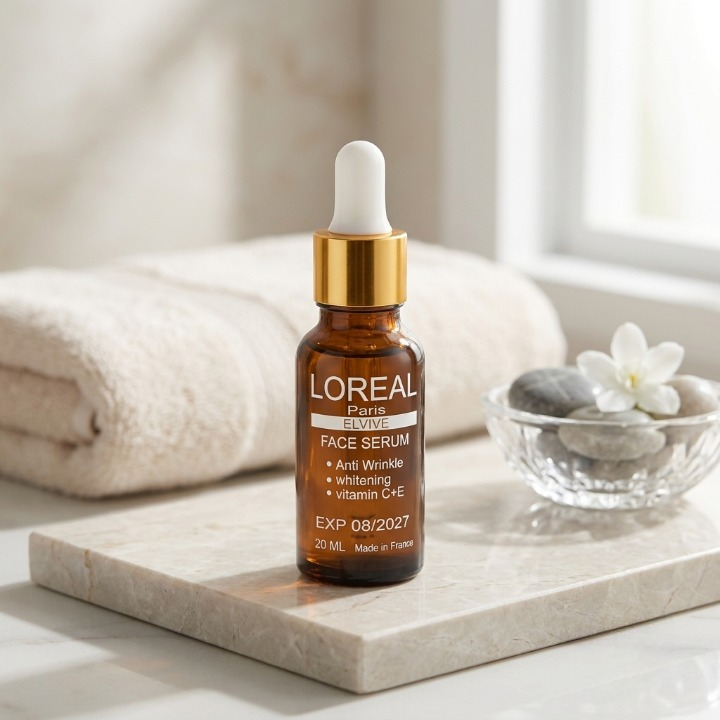
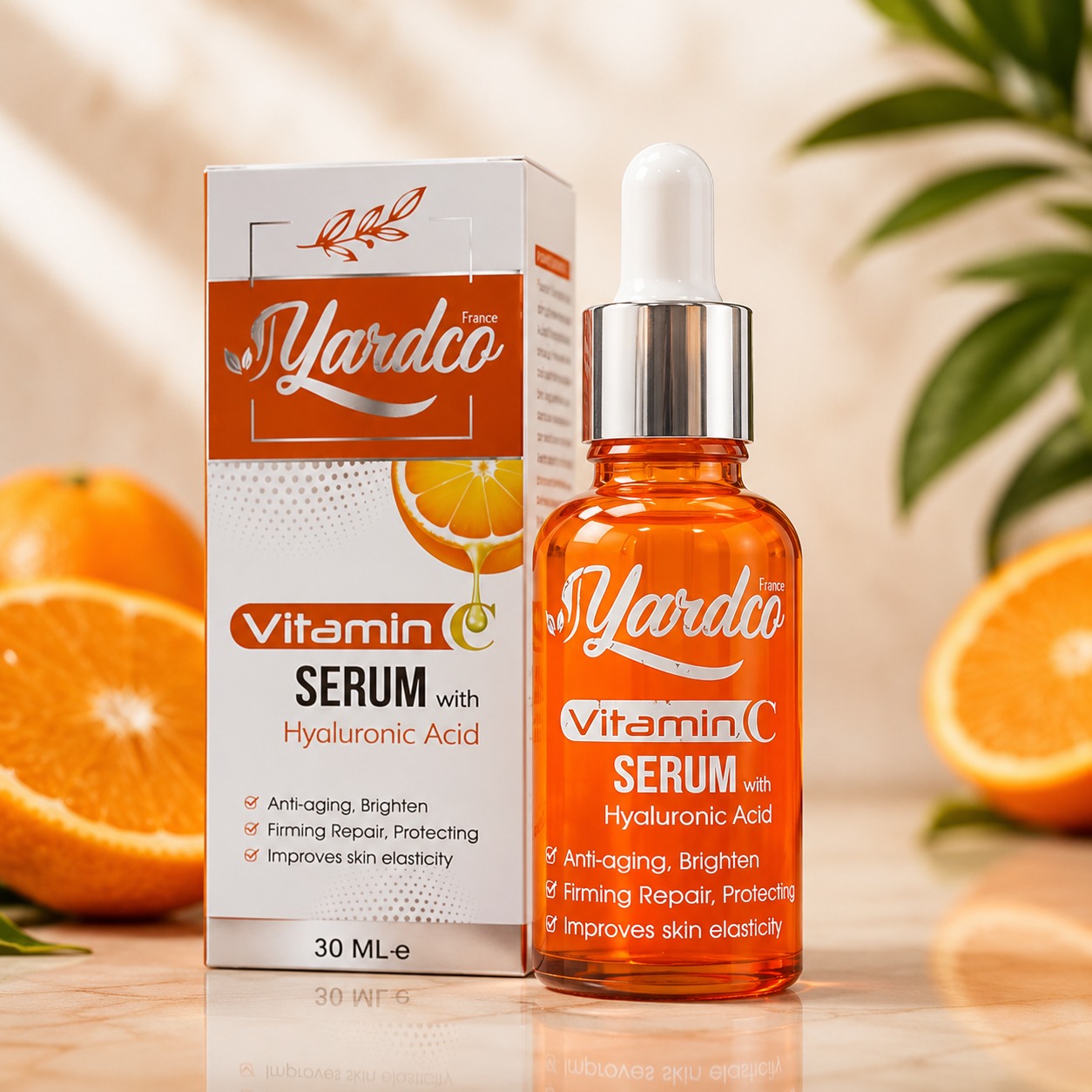
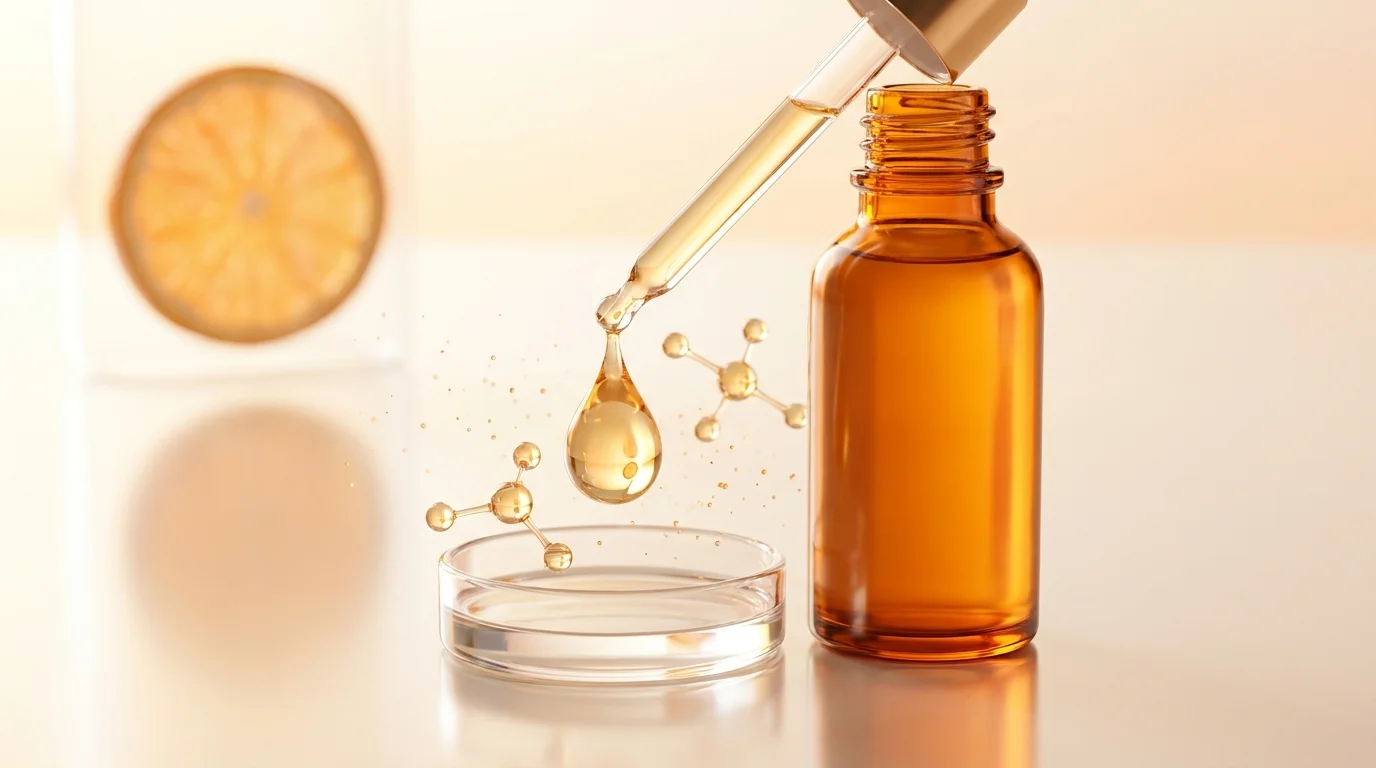
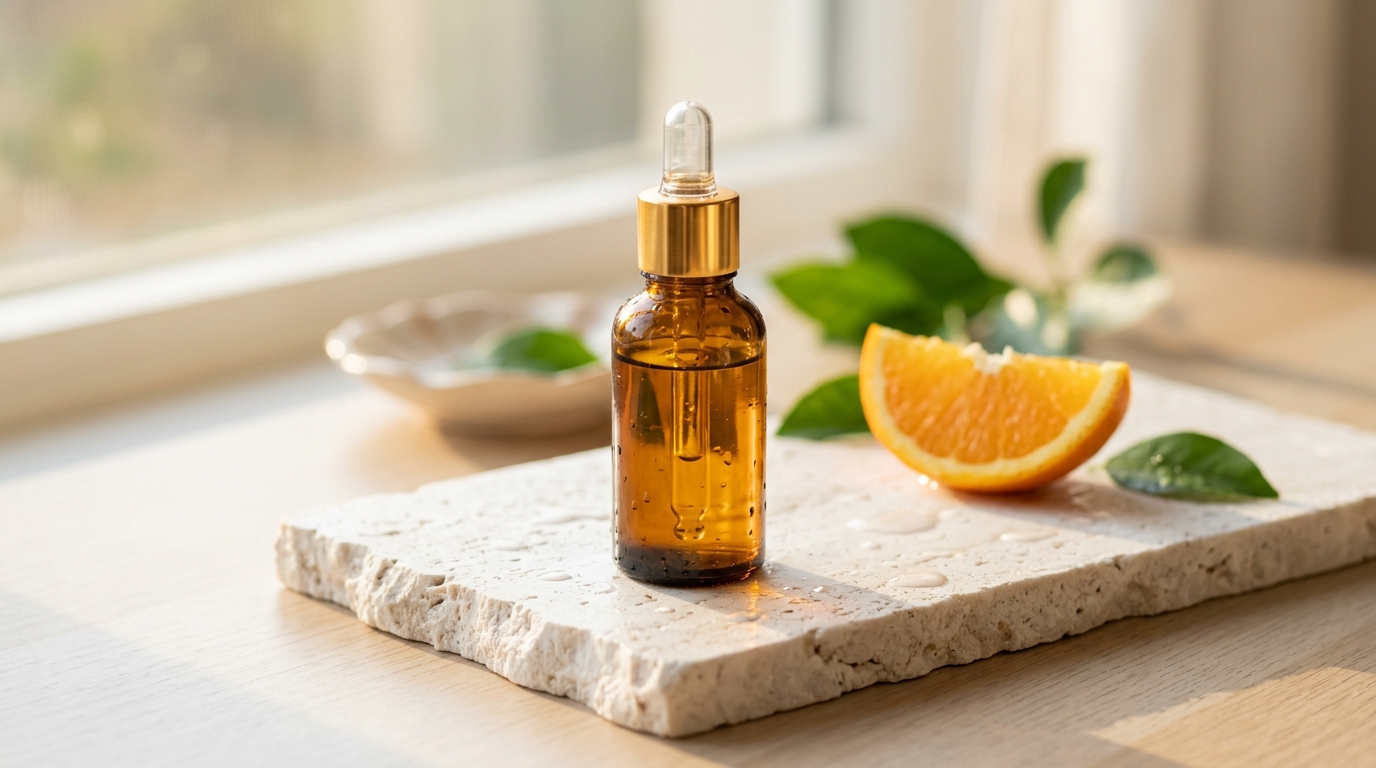 Figure 1: High-grade Vitamin C formulas are packaged in opaque or amber glass bottles to prevent light and air from breaking down the active antioxidants.
L-Ascorbic Acid vs. Vitamin C Derivatives: Which One Do You Need?
When you check the ingredient list on a serum box, you will rarely see the simple phrase "Vitamin C." Instead, cosmetic formulators use either pure L-Ascorbic Acid or stabilized synthetic derivatives.
Understanding the difference between these forms is the key to getting great results without burning your face. Here is how the most common forms compare:
| Ingredient Name | Best Skin Match | Optimal Strength | Pros & Trade-Offs |
|---|---|---|---|
| Pure L-Ascorbic Acid | Normal to Oily, resilient skin | 10% to 15% | Direct biological active with the deepest clinical proof. However, it requires a low pH (under 3.5) and can sting sensitive skin. |
| Sodium Ascorbyl Phosphate (SAP) | Acne-prone & oily skin | 5% to 10% | Very stable and water-soluble. Clinical studies show it has natural antimicrobial effects that help reduce acne breakouts. |
| Magnesium Ascorbyl Phosphate (MAP) | Dry & sensitive skin | 3% to 10% | Gentle on the skin barrier. Formulated at a neutral pH (around 6.0 to 7.0), meaning zero stinging or redness. |
| Tetrahexyldecyl (THD) Ascorbate | Mature & normal to dry skin | 5% to 20% | Oil-soluble form that penetrates lipid layers deeply. Very stable and pairs beautifully with rich night creams and face oils. |
| Ascorbyl Glucoside | Beginners & combination skin | 2% to 5% | Vitamin C bound to a glucose molecule. Extremely stable in clear water serums and converts to ascorbic acid inside the skin cells. |
Vitamin C Application Rules: Do's and Don'ts
Applying Vitamin C incorrectly can turn your serum yellow on your skin or cause contact dermatitis. Follow these strict clinical rules for safe daily use:
What You MUST Do
- Apply in the morning: Vitamin C provides maximum value during daylight hours by neutralizing UV-induced free radicals alongside your SPF.
- Store in a cool, dark place: Keep pure ascorbic acid bottles inside a bathroom cabinet or drawer away from direct sunlight and heat.
- Close the dropper immediately: Oxygen entering the bottle speeds up oxidation. Seal the lid tightly after each drop.
- Start at 10% concentration: Higher percentages like 20% do not give twice the results, but they do cause twice the skin irritation.
- Follow with moisturizer and sunscreen: Always lock in your serum with a hydrating moisturizer and broad-spectrum SPF 30+.
- Check the color regularly: Fresh ascorbic acid is clear or pale champagne. A golden tint is normal, but dark orange means it has oxidized.
What You MUST AVOID
- Do not use oxidized dark brown serum: Oxidized Vitamin C (dehydroascorbic acid) loses its antioxidant power and can clog pores.
- Do not mix with strong AHAs or BHAs in the same step: Stacking glycolic acid and ascorbic acid drops your skin pH too low and triggers redness.
- Do not touch the dropper tip to your skin: Touching your face transfers oil and bacteria into the bottle, spoiling the formula faster.
- Do not expect overnight fixes: Melanin inhibition takes four to eight weeks of consistent daily application to become visible.
- Do not leave the bottle open on your vanity: Air exposure turns active ascorbic acid useless in a matter of weeks.
- Do not apply to freshly irritated or broken skin: If your skin barrier is compromised, pause all acidic serums until it heals.
How to Tell If Your Vitamin C Has Oxidized: The Color Guide
Pure L-ascorbic acid is notoriously sensitive to light, oxygen, and heat. When exposed to air, it goes through chemical oxidation, turning into dehydroascorbic acid (DHAA) and eventually diketogulonic acid.
Here is how to read your serum's color so you never waste money or apply degraded product to your skin:
Clear to Pale Straw Yellow: Fresh & Potent
Your serum is in its peak active state. The antioxidant molecules are intact and ready to neutralize free radicals. Continue daily use as normal.
Golden Yellow to Light Amber: Mild Oxidation
Some oxidation has started, but approximately 70% to 80% of the active Vitamin C remains potent. The product is still safe to use on non-sensitive skin, but finish the bottle within two to three weeks.
Dark Orange to Rusty Brown: Expired & Oxidized
The ascorbic acid has completely degraded. It will no longer protect against free radicals and can leave an orange stain on pores. Safely discard the remaining serum and replace it with a fresh bottle.
 Figure 2: Daily morning application of Vitamin C underneath broad-spectrum sunscreen produces visible radiance and evens out post-acne pigmentation over 8 to 12 weeks.
"Patients frequently ask me if a 20% Vitamin C serum will clear their dark spots twice as fast as a 10% formula. The clinical answer is no. Research demonstrates that cutaneous absorption peaks around 15% to 20%, but irritation increases exponentially past 15%. If you have sensitive or rosacea-prone skin, a 10% formula or a neutral-pH derivative like Sodium Ascorbyl Phosphate delivers superior results simply because you can use it every day without barrier breakdown."
Your 30-Day Vitamin C Transition Plan: Zero-Sting Protocol
To introduce Vitamin C into your morning routine without triggering burning, peeling, or breakouts, follow this calm 30-day schedule:
Week 1: The Jawline Patch Test & Initial Frequency
Dab three drops of serum onto your inner jawline or forearm for two consecutive days. If no redness occurs, apply three to four drops across your entire face on Monday and Thursday morning only. Always follow with moisturizer and SPF.
Goal: Confirm your skin tolerance without shocking the barrier.Weeks 2 to 3: Alternate-Day Morning Application
Increase application to every other morning (Monday, Wednesday, Friday). Cleanse your skin, pat dry, smooth the serum gently with your palms, and wait one to two minutes before applying your day cream.
Goal: Build stable antioxidant reservoirs within the epidermal layers.Week 4 and Beyond: Daily Morning Defense
Apply your Vitamin C serum every single morning as your standard antioxidant shield. If you ever experience mild tightness or dry flaking, mix two drops of hyaluronic acid serum with it or buffer with moisturizer first.
Goal: Enjoy sustainable daily radiance and long-term sun defense.Verified Reader Experiences With Vitamin C
Here is what our readers noticed after switching from unstable generic formulas to the evidence-based Vitamin C protocol:
"I used to buy 20% ascorbic acid serums that left my skin flaming red and peeling around my mouth. Audrey's advice to downgrade to a 10% stabilized derivative changed everything. No more stinging, and my stubborn post-acne marks faded within six weeks."
"The color chart in this article saved me from wasting money. I realized my previous serum had turned deep rust brown and was actually staining my pores. Now I store my bottle in a dark drawer and the color stays champagne fresh for months."
"Layering Vitamin C under my mineral sunscreen gave my skin a noticeable luminous glow that everyone keeps commenting on. This guide explains the exact science in simple terms without any marketing fluff."
"I took advantage of the WhatsApp consultation card at the top. The team recommended Sodium Ascorbyl Phosphate for my acne-prone skin, and it helped soothe active redness while fading dark spots. Outstanding editorial guidance!"
Frequently Asked Questions About Vitamin C Serum
Find clear answers to common questions about formulation science, stability, and layering order:
What does Vitamin C serum do for your face?
Vitamin C provides powerful antioxidant protection against environmental pollution and ultraviolet rays. It helps block the enzyme tyrosinase to fade dark marks, improves dull uneven skin tone, and supports natural collagen formation for smoother skin texture.
What is the best time to apply Vitamin C serum?
Morning application is the gold standard in dermatology. Applying Vitamin C in the morning allows it to work as an antioxidant defense net alongside your broad-spectrum sunscreen against daytime UV rays and pollution.
Can I use Vitamin C serum every single day?
Yes, once your skin has adapted. Beginners should start two to three mornings per week. After two weeks without stinging or redness, you can safely apply your Vitamin C serum every morning.
Can I mix Vitamin C and Niacinamide together?
Yes. Modern formulation chemistry confirms that stabilized Vitamin C and Niacinamide can be layered together without canceling each other out. In fact, combining them offers dual brightening and barrier-strengthening benefits.
Can I use Vitamin C and Retinol together?
We recommend separating them by time of day: apply your Vitamin C serum in the morning for environmental defense, and apply your Retinol at night for cellular renewal. Using both in the same step can overwhelm your skin barrier.
Why does my Vitamin C serum smell like hot dogs or metal?
Serums containing L-Ascorbic Acid paired with Ferulic Acid often have a distinctive metallic or smoky scent. This is a normal byproduct of the chemical interaction between ascorbic acid and ferulic acid, not a sign of spoilage.
How long does a bottle of Vitamin C serum stay fresh?
A bottle of pure L-ascorbic acid generally stays fresh for three to four months after opening if stored properly away from heat and light. Derivatives like Sodium Ascorbyl Phosphate or THD Ascorbate remain stable for six to twelve months.
What should I do if Vitamin C stings my skin?
If mild tingling lasts a few seconds, that is common with acidic formulas. If burning or redness persists, rinse your face with cool water. Pause the serum and switch to a gentler derivative like Magnesium Ascorbyl Phosphate formulated at a neutral pH.
Does eating oranges replace topical Vitamin C serum?
Eating citrus fruits is essential for your internal health and immune system, but dietary Vitamin C only reaches your skin in limited amounts. Applying a topical serum provides up to twenty times higher concentration directly to your epidermal cells.
Can Vitamin C serum cause acne or clogged pores?
Pure Vitamin C does not clog pores. However, if an ascorbic acid serum oxidizes into dark orange liquid, the degraded byproduct can settle in pores. In addition, heavy oil-based carriers can cause breakouts in oily skin types. Choose water-based serums if you are acne-prone.
Ready to Transform Your Morning Skin Defense?
Do not let marketing hype or unstable formulas confuse you. Choose the right Vitamin C form for your skin type, protect it from light, and pair it with daily sunscreen for healthy, lasting radiance.